Showing posts with label process. Show all posts

Friday, 9 May 2014

Klee Cityscape

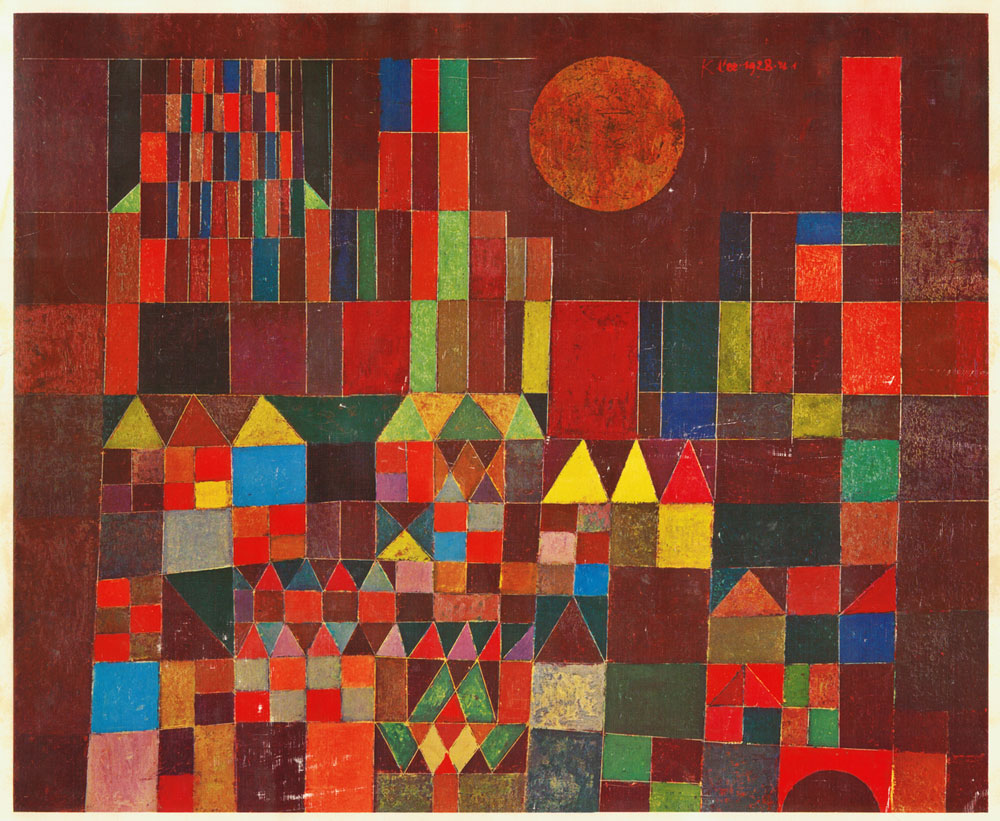
With this project we started by looking at some of Paul Klee's cityscape paintings, with a particular focus those using geometric shapes. we developed our ideas in our visual diaries and made collage cityscapes using colourful paper. You can see these here if you would like to check back.


This term we are developing this theme further by using some geometric stamp shapes I made with a pile of cheap erasers bought from a 'bargain basement $2 shop' (it was even more of a bargain because a pack of 8 cost $1!!!)

I started by demonstrating to the children how to print with the stamps. As they had had some practise making buildings using 2D regular maths  shapes and had created their collage using regular geometric shapes most of them had a very clear idea of what to do.

 
The children then printed onto strips of felt using fabric ink, leaving the washed stamps looking like this! D:

They are now using the short pieces of felt as a sampler to practise stitches on before moving on to embellish their long strip of fabric.


The long pieces once decorated will be folded as shown in the photo to become the pencil case to store their art room equipment in. These should easily last them till the end of  primary school. 


*** Here's a tip for anyone trying this at home.
I tried putting the ink under a sponge to make a stamp pad, it did not work very well with the fabric ink and felt. The best way was to give the kids a plate with a spoonful of ink and a paintbrush. They painted the ink onto the 'stamp' and pressed it onto the fabric. This gave a much better result.

Preparing to print!


At last! Every child has their printmaking plate ready to go. There is no swimming lessons, or sport's events or any other excursions - that I know of!  (There's NAPLAN but fortunately not too many class changes as a result!)

 
 First we explored taking a line for a walk (Paul Klee style) then made up 'rules' for taking our lines for a walk creating patterns  that were then used to create designs for printmaking. You can see in Megs visual diary the process we have been through to develop our printmaking plates.


But now I have to go to a meeting to address some changes that need to happen in our school! Fortunately for me the Emily, the lovely lady stepping in to take my class on Monday is also a friend and was able to pop into the Art studio today (Saturday) and I could give her a quick printmaking tutorial - to give her some tips and clearly show her what we are working on. Thanks Emily!


At the same time I did a few colour tests for the children to see how the colours they have chosen will go together. 

I also made up two examples so they could see that their work could be repeated by simply sliding their design ...

OR by rotating the design.

Same printmaking plate - two very different designs.

These pieces of fabric will be decorated using embroidery stitches then transformed into anything the children want to make. I have said I want to see them print on fabric and use threads to decorate the surface of their work other than that it is up to them. Some children will be making pencil cases - if they are new to the school or have lost the ones they have made last year. Others will be making drawstring bags or cushions. One boy suggested coasters to go under hot drinks on the table, another has bought in a T-shirt so he can stitch his finished piece to the front of that.
I'm looking forward to seeing what they all come up with!

Monday, 7 April 2014

Building on our experiments.

On my most recent trip to Europe I spent a week in London and whilst there I visited the TATE Modern. An afternoon strolling around the Paul Klee exhibition inspired some ideas for lessons this term.
All classes from year three to seven have been focusing on the art work of Paul Klee. my last post showed how we experimented with lines and mark making. The children in year 4-7 have been working on projects based around "taking their line for a walk" (Paul Klee is renowned for saying a line is a dot that went for a walk and drawing is taking a line for a walk.)

The year threes however have looked at a different style of work by Paul Klee where colour and shape is the focus.
 They started by discussing the painting to identify the types of shapes they could see. This was a great opportunity to link maths and art using the terms to describe the geometric shapes or regular shapes that Klee uses in his art works of this type. We compared them to organic or irregular shapes and recorded this information in their visual diaries.

Then came time to play with some 2D maths shapes to construct and record as many different building shapes usiing the simple squares, rectangles and triangles.
 These ideas were then used to create a colourful collage of buildings on a coloured ground.
They finished by making a quick two sentence reflection on their work in their visual diaries. 
 I like how I ...
But I think it would have been even better if I ....

Monday, 10 March 2014

Trust the Process.

The art studio is not all about a final product. The creative process is very important. Often our lessons will involve discussing the work of others (peers, well known or less known artists from different times or different cultures) from these discussions we develop ideas and practise skills before producing an art work. 

Last week has had a big focus on the creative process - playing with mark making tools, exploring what they can do. There was absolutely no expectation to make anything, except interesting marks on paper. Almost every child from year 4-7 loved this activity.

 
 We recorded what we did in our visual diaries, recreating some of the lines and marks we liked most.

Then came the imagination challenge. The children were asked to spend some time looking into all the scribbly marks on the large sheets in front of them to find hidden creatures or plants. There were also recorded into their visual diaries and developed into drawings that showed others more clearly what was in their imagination.
 These ideas will be further developed for use in different printmaking and painting activities inspired also by the work of Paul Klee. Different year levels and different classes will be working on slightly different projects although our starting point is the same.